français
 English
 العربية
Guangzhou Rosin Packaging Co., Ltd



Against the backdrop of a growing global circular economy, EPR schemes and tightening overseas plastic‑restriction regulations, plastic trays for fresh meat and seafood are undergoing a fundamental transformation. Many fresh‑food packaging suppliers fall into a sustainability misconception: they believe that using recycled‑PET material and labelling products “recyclable” is enough to meet environmental goals. In real‑world recycling streams, however, numerous PET meat‑trays, while seemingly recyclable, fail to achieve high‑quality closed‑loop reuse.
A complete packaging system for chilled meat, fish and seafood trays usually consists of four components: PET tray + absorbent soaker pad + adhesive glue + top sealing film. Once the product is sold and enters the recycling process, multiple contamination issues arise:
This creates a well known industry paradox: although PET trays are theoretically recyclable, high‑quality closed‑loop recycling back into food‑grade packaging is rarely achieved, leaving circularity merely on paper.
The Zapora® liquid‑retention tray solution, launched by European packaging manufacturer kp, offers a viable way forward for the sector. Its innovation does not rely on adopting brand‑new eco‑materials, but returns to the geometric structure of the thermoformed tray base, putting into practice the advanced principle of “Design for Recycling”.
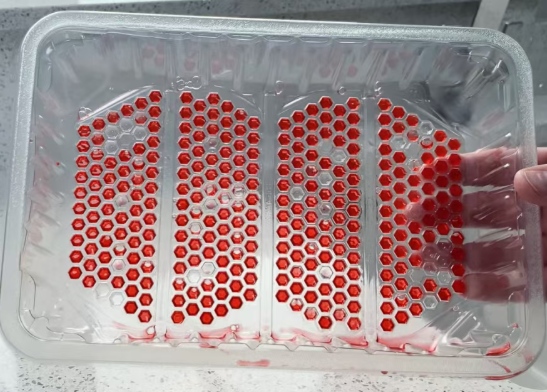
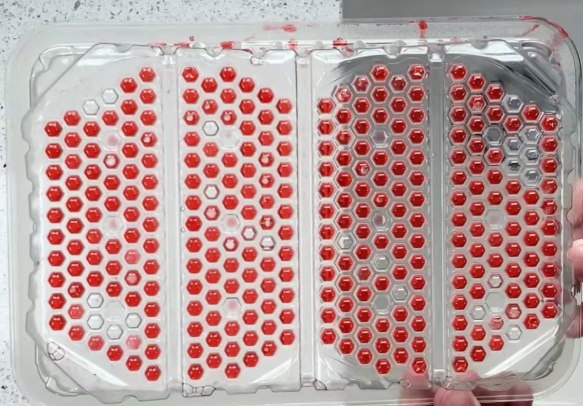
Built‑in micro liquid‑retention reservoirs are molded into the tray base, removing the need for separate absorbent pads. Juice released from meat or seafood flows down drainage channels into integrated grooves, where liquid is trapped inside the cavities and prevented from spreading and contaminating the sealing flange.
By eliminating soaker pads and associated adhesives entirely, the whole pack is simplified into a near‑mono‑material PET system, eradicating cross‑material recycling contamination at source. This pad‑free technology has been extended to vacuum‑skin seafood packaging under the kp Evolve® Fish Boards product line, with trays capable of containing up to 100% recycled rPET feedstock. It delivers a genuine closed‑loop cycle: tray production → fresh‑food use → recovery & remanufacturing → new food grade trays.
The evolutionary roadmap for food packaging is now clear: Old workflow: Tray + absorbent pad + adhesive → MAP / VSP packaging → Hard‑to‑recycle multi‑material pack New sustainable workflow: Liquid‑holding tray structure → Remove soaker‑pad auxiliaries → Mono‑material PET system → Recycled rPET feedstock → Recycle & remanufacture new food trays
As a long established original manufacturer specializing in PET and rPET thermoformed blister packaging, Rosinpack in Guangzhou has long identified this emerging European trend in fresh‑food packaging. We have integrated our “structure‑driven circularity” R&D philosophy into our factory’s long‑term upgrade roadmap.
Supported by our large‑scale automated thermoforming workshop and more than 10‑year experience in custom food‑pack mould development, we now mass‑produce stable food‑grade vacuum‑skin trays and MAP fresh‑lock trays made from virgin PET or up to 100% recycled rPET. Our products comply with international food‑contact standards including FDA and EFSA, and are supplied to meat and seafood processors both domestically and globally.
Building on this foundation, Rosinpack’s technical R&D team is developing a new‑generation mono‑material meat tray with built‑in juice reservoirs, requiring no absorbent pads.
For a long time, when the industry discusses sustainable upgrades for fresh‑food packaging, the immediate response has been material substitution: switching to biodegradable plastics or increasing recycled‑PET content. The key lesson the Zapora case delivers to the thermoforming sector is clear: sustainability does not always require new materials. Optimizing packaging geometry itself is one of the most powerful green‑technology solutions.
Pad‑free liquid‑retention trays deliver multi‑win benefits:
✅ Environmental benefits: Eliminate cross‑contamination from auxiliary materials, unlock food‑grade closed‑loop recycling for PET trays, and meet EU EPR, international plastic‑restriction and carbon‑footprint regulations.
✅ Supply‑chain benefits: Remove costs for soaker‑pad procurement, storage and manual pad‑insertion work, simplifying packaging workflows for meat processors and lowering consumable expenses.
✅ Product‑quality benefits: Juice is trapped inside base cavities so meat is not submerged in exudate, helping to extend the retail shelf‑life of fresh protein.
The circular transformation for fresh‑meat thermoformed trays has only just begun. Moving from “recyclable‑labelled” packaging toward genuine circularity, Rosinpack will keep advancing structure‑oriented thermoform innovation. We combine mass‑production of high‑barrier recycled‑PET trays with custom‑built pad‑free liquid‑retention fresh‑food trays, delivering end‑to‑end sustainable blister packaging solutions with reliable fresh‑keeping, cold‑chain compatibility and closed‑loop recycling value for meat and seafood brands at home and overseas.